
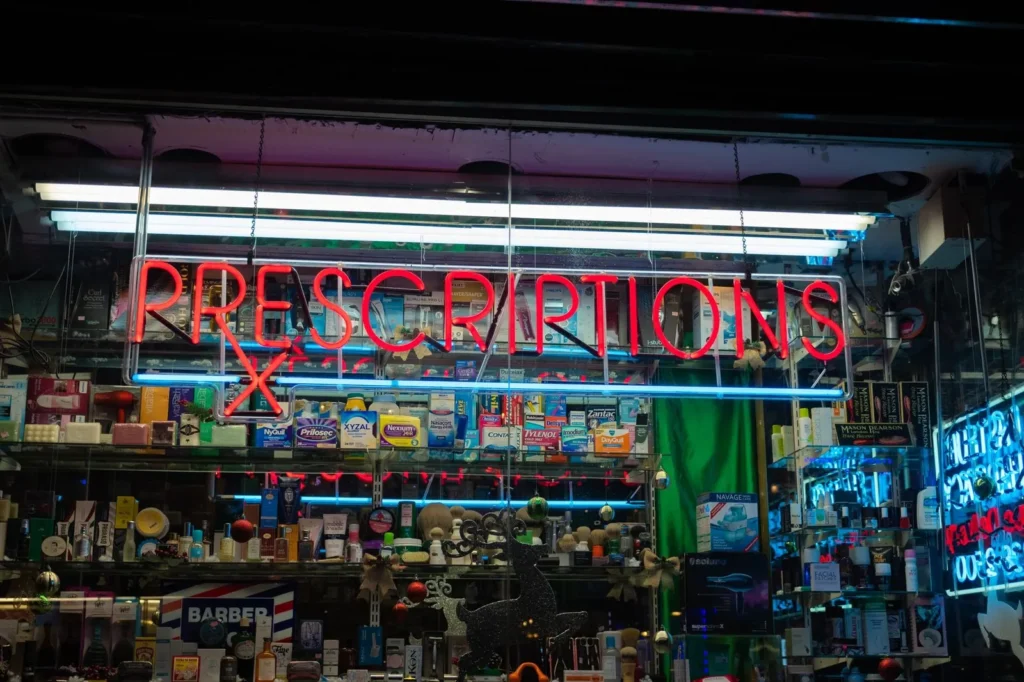
A pharmacy or clinic visit in Makkah by taxi is, in most cases, a simple errand. For the pharmacy half, the two national chains, Nahdi and Al-Dawaa, have branches across the city, hotel receptions know the nearest one, and a short car journey with the vehicle waiting while you go in is the simplest way to do it. A clinic visit in Makkah for visitors takes a little more organising, because you need the right paperwork, a sense of which facility to go to, and a plan for getting back. This guide is about that logistics chain only: how to find the right place, what to carry, how to book the car, and when a taxi is the wrong answer altogether and the emergency number is the right one. It does not give medical advice; for that, Saudi Arabia’s Ministry of Health runs a 24-hour medical consultation line, and your own doctor or insurer is the other voice to hear.
First question: is this a taxi journey or an emergency call?
Before anything else, decide which kind of situation you are in. For anything that might be serious, the health page of the FCDO’s Saudi Arabia travel advice (last updated September 2026) is blunt: call 911 and ask for an ambulance. The Saudi Red Crescent Authority, which runs the ambulance service, also operates apps that let a user call an emergency team and share a location. A private car, however quickly it arrives, cannot do what an ambulance crew does, and a driver should never be asked to make that judgement for you.
Everything below assumes the other kind of situation: the medicine that has run out, the rash that needs a pharmacist’s eye, the sprain that wants an X-ray, the child who needs to be seen by a doctor but is not in danger. Those are taxi journeys, and they go better when they are planned like any other outing in Makkah rather than improvised at the kerb.
Pharmacy in Makkah: which chains exist and how to find the nearest branch
Two chains dominate. Nahdi Medical Company describes its network as covering 145 cities and villages across the Kingdom and runs a pharmacy locator and an app; Al-Dawaa Pharmacies has a branch finder on its website and advertises home delivery. Both have multiple branches in Makkah, including in the central area and the hotel districts, and both sell the familiar range of over-the-counter medicines, first-aid items, baby supplies and toiletries. Independent pharmacies exist as well, often in the commercial streets of the outer districts.
The quickest way to find the right branch is to ask hotel reception, who will know which pharmacy their guests use and whether it is within walking distance or needs a car. Failing that, and rather than searching online for a “Makkah pharmacy near hotel”, the chains’ own locators are more reliable than a generic map search, because they show current branches and, in many cases, opening hours. Some branches advertise round-the-clock opening, but do not assume it: confirm on the locator or by phone before setting out late at night, and have a second branch in mind.
Can you fill a UK or other foreign prescription in Saudi Arabia?
No. The FCDO states plainly that UK prescriptions are not accepted in Saudi Arabia and that only doctors registered and licensed by the Saudi Commission for Health Specialties may issue prescriptions. That rule applies to prescriptions from any other country too. In practice it means that if you need a prescription-only medicine during your stay, the route is a consultation with a Saudi-licensed doctor, whether in person at a clinic or through the Ministry of Health’s remote services, followed by a pharmacy visit with the prescription they issue.
Pharmacists can and do help with over-the-counter medicines, and many speak English, but they cannot dispense prescription-only medicines against a foreign script, however legitimate. If the medicine you need is one you take regularly, bring enough for the whole trip with a margin, carry the original packaging and your doctor’s letter, and treat a Makkah pharmacy as a back-up rather than the plan.
Controlled medicines: what the SFDA requires
Some medicines that are routine at home are controlled substances in Saudi Arabia, and the FCDO warns that you may need approval from the Saudi authorities to bring some prescription drugs. The Saudi Food and Drug Authority sets out the process: for medicines containing narcotic or psychotropic substances carried for personal use, travellers apply for a personal clearance permit through the SFDA’s Electronic Controlled Drugs System, attaching their passport copy, a photo of the medicine in its outer box, and a current prescription or doctor’s report dated no more than six months earlier. The SFDA’s guidance, published in May 2026, caps the permitted amount at a 30-day supply or the length of the stay, whichever is shorter.
For a Makkah pharmacy run this matters in one specific way: a controlled medicine that runs out cannot simply be replaced over the counter, and even a Saudi prescription will be handled under stricter rules. If someone in your party depends on such a medicine, sort the permit and the supply before travel, carry the documents the FCDO lists, with the quantity, drug name, dosage, doctor’s signature and clinic stamp, and keep them with the medicine rather than in a suitcase in the hotel’s luggage store.
Clinic in Makkah for visitors: how to choose where to go
Makkah has public hospitals run by the Ministry of Health, primary health care centres, and private hospitals and polyclinics, and the FCDO describes healthcare facilities in major Saudi cities as being of a high standard. The question for a visitor is which to use, and the answer depends on three things: what cover you have, how urgent the matter is, and what your hotel or the 937 line recommends. Visitors on Umrah and visit visas have insurance attached to the visa and should check its documents for the network and the claim procedure; those travelling on other arrangements should check their own travel insurance, which the FCDO advises should cover local treatment and medical evacuation.
Hotel receptions in the central area deal with unwell guests every week and will usually name a nearby private clinic or hospital that accepts walk-in visitors and has English-speaking staff. The FCDO also publishes a list of medical providers in Saudi Arabia. Phone ahead if you can: confirm they are open, that they will see a visitor, and what documents and payment method they need. Then book the car.
The 937 line and Sehhaty: a doctor’s voice before the taxi
The Ministry of Health’s 937 service is a 24-hour call centre that, among other things, provides medical consultation through doctors around the clock, takes complaints, and gives guidance in cases of poisoning. For a visitor unsure whether a symptom needs a pharmacy, a clinic or an ambulance, it is the first call to make, because it can tell you which door to go to and spare you a wasted journey. The Ministry’s Seha Virtual Hospital has in recent Hajj seasons offered on-demand consultations through 937 and the Sehhaty app in seven languages including English, Urdu and Indonesian; outside Hajj the service continues, though we could not confirm the language range applies year-round, so ask when you call.
Use the call to settle the practical questions as well as the medical one: whether to go now or in the morning, whether a pharmacy will do, and whether the person should travel sitting up, lying down or not at all. Those answers decide what kind of car you book and when.
Booking a pharmacy or clinic visit in Makkah by taxi
A pharmacy run is a waiting-car job. Book the vehicle to take you there, wait while you go in, and bring you back; the wait is short, the alternative of two separate bookings is clumsy, and nobody wants to stand outside a pharmacy at midnight looking for a return ride. Our guide to a waiting car versus a return pickup explains how the two options work in the booking tool. For a clinic visit, where you may be inside for an unpredictable time, a return pickup booked once you know when you will be finished is usually better than a car waiting outside.
Write the purpose in the booking notes. “Pharmacy run, car to wait” or “clinic visit, passenger unwell, needs the front seat and the air conditioning on” tells the driver what matters without sharing anything private. If the person travelling is elderly or unsteady, say so, so that the driver pulls up as close to the entrance as the road allows. Our article on what to write in Makkah booking notes covers the hotel-side details, such as tower and entrance, that make the pickup itself quick.
Pharmacy runs from a central hotel: the drop-off reality
Hotels close to the Grand Mosque sit inside the area where vehicle access is managed by the security authorities, and at peak times, through Ramadan, on Fridays and on Eid, a car cannot reach the hotel door. For a pharmacy run that is usually a reason to walk: there are pharmacies within the central area, and a taxi that has to stop at the edge of the managed zone saves you nothing. Ask reception where the nearest branch is on foot before you book a car at all.
Where a car does make sense from a central hotel is for a clinic or hospital in an outer district, or for an unwell person who cannot walk to the edge of the zone. In that case the pickup point is the hotel’s assembly point rather than its frontage, and the hotel staff are the people to coordinate it. Our guide to handing pickup details to hotel staff in Makkah explains how to leave the arrangement with reception so that a relative can concentrate on the patient rather than the phone.
Travelling with someone who is unwell: practical points for the car
These are logistics, not medical instructions. Seat the unwell person where they are most comfortable, usually the front or the middle of the rear seat, with a window they can control. Bring water, a bag in case of nausea, any medication they are already taking, and the documents the clinic will ask for: passport, visa or permit, insurance details and a note of any medicines and allergies. If a child is unwell, bring whatever comforts them and a change of clothes. If the person uses a wheelchair or walker, tell us at booking so the vehicle has room for it; our article on folding wheelchairs and walkers in a Makkah taxi covers the detail.
Decide who goes. One companion is usually right for a clinic visit; a crowd in the waiting room helps nobody, and the rest of the family can stay with the children at the hotel. Agree how the companion will update the group, and make sure the person who stays behind has the booking reference so they can arrange the return pickup when the clinic calls to say the patient is ready.
A fictional case: a grandmother’s blood-pressure tablets run out
Imagine a fictional family from Leeds, invented purely to illustrate the sequence and not a real customer, whose grandmother discovers on the fourth day in Makkah that her regular tablets were left in a bathroom cabinet at home. The medicine is a common prescription-only drug, not a controlled one. Her son’s first instinct is to find a pharmacy and ask; the pharmacist, when he gets there, explains courteously that the UK repeat prescription on his phone cannot be dispensed against.
Their second attempt goes in the right order. They call 937 from the hotel room and are told that a licensed doctor needs to see or consult with the patient before a prescription can be issued, and are pointed to how to arrange that. They book a taxi to a private clinic recommended by reception for the quiet mid-morning, with the grandmother in the front seat and her son beside the driver’s notes; the clinic issues a Saudi prescription; the car, which has waited at their request because the visit was expected to be short, takes them on to a pharmacy and back to the hotel. They keep every receipt for the insurer. The whole episode costs them a morning, and the lesson they take home is to pack medication in hand luggage, not a cabinet.
A fictional case: a child with a fever late in the evening
Now consider a fictional couple from Birmingham, again an illustration only, whose six-year-old develops a fever after Isha on a Ramadan evening. They do not know whether this is a pharmacy matter, a clinic matter or an emergency. So they ring 937, describe the symptoms, and follow the doctor’s advice on what to do that night and whether the child needs to be seen; that advice is theirs alone and is not something this article can supply. The practical part is ours: the central-area streets are closed to cars, so if a pharmacy is needed tonight it is a walk to the nearest branch the hotel names, and if a clinic is needed in the morning, the booking is made now for a pickup after Fajr from the hotel’s assembly point.
They write “clinic visit, child unwell, one parent travelling” in the notes, ask for the air conditioning to be on when the car arrives, and leave the other parent at the hotel with the booking reference to arrange the return. In the morning the roads are clear, the clinic is quiet, and the child is seen before the day’s heat. Nothing about the plan required medical knowledge; it required knowing who to call and when the roads would be open.
Paying, paperwork and the insurer
Clinics and pharmacies in Makkah take cards and cash, but a private clinic may ask for payment before treatment and leave you to reclaim it from your insurer, so carry a card that works abroad and keep every itemised receipt, prescription and report. The FCDO’s advice is to contact your insurance company quickly if you are referred to a medical facility for treatment, which in practice means a phone call from the waiting room rather than after you get home. If your cover is the insurance attached to an Umrah or visit visa, its documents will set out whether you must use network providers and how to claim.
Ask the clinic for a copy of any report in English if it can provide one, and photograph everything before you leave. Those documents are what your own doctor will want to see when you return, and what the insurer will ask for first.
Checklist for a pharmacy or clinic run in Makkah
- If it might be serious, call 911 for an ambulance; do not book a taxi.
- Call the Ministry of Health’s 937 line first for a doctor’s view on pharmacy, clinic or wait.
- Ask hotel reception for the nearest pharmacy on foot and for a clinic they recommend; phone the clinic ahead.
- Remember that foreign prescriptions are not accepted; a Saudi-licensed doctor must prescribe.
- Carry passport, visa or permit, insurance details, current medicines and a note of allergies.
- For controlled medicines, hold the SFDA permit and documents and keep them with the medicine.
- Book a waiting car for a pharmacy run and a return pickup for a clinic visit; describe the passenger’s needs in the notes.
- At peak times from a central hotel, expect to walk to the pharmacy and to meet the car at the assembly point for a clinic.
- Keep every receipt and report, and call your insurer from the clinic.
Arranging the journey with Makkah Cabs
A health errand in an unfamiliar city is easier when the transport is the one part you do not have to think about. Tell us it is a pharmacy or clinic run, say whether the car should wait, note anything the driver should know about the passenger’s comfort, and check the live quote for the next available slot; the team at Makkah Cabs will get you there and back so you can concentrate on the person who needs you.
Sources reviewed 15 October 2026: Ministry of Health (937 service page; Seha Virtual Hospital Hajj 1446 announcement, May 2025), Saudi Food and Drug Authority (personal clearance permits for controlled medicines, May 2026), FCDO travel advice for Saudi Arabia (health page, September 2026), Saudi Red Crescent Authority (emergency apps), Nahdi Medical Company and Al-Dawaa Pharmacies corporate sites (branch locators). This article covers logistics only and gives no medical advice; pharmacy opening hours, clinic acceptance of visitors and insurance network rules were not verified for individual branches and should be confirmed directly. Photo: Alexandros Chatzidimos / Pexels.