Before you arrange the journey
The Makkah Museum at Al-Zahir Palace is the city’s regional antiquities and heritage museum, housed in a palace that King Abdulaziz ordered built in 1946 and that was converted into a museum in 2006. The honest answer to the question most people ask first, “is it open?”, is that we could not verify a current opening arrangement on any official page as of 15 October 2026. The Ministry of Culture’s Museums Commission said in 2021 that the museum had closed during the pandemic and that it hoped to reopen it, and a restoration contractor’s page describes a redesign commissioned by the Ministry of Culture, but neither gives a reopening date or current hours. This article explains what the palace is, what the collections contain, how an Al-Zahir Palace museum visit fits into a Makkah stay, and exactly how to check the Makkah Museum opening arrangements before you ask a driver to take you there.
What is the Makkah Museum at Al-Zahir Palace?
Saudipedia, the national encyclopaedia produced under the Saudi Press Agency, lists the site as the Makkah Al-Mukarramah Museum, also known as the Al-Zaher Palace Museum. You will see the name spelt Al-Zahir, Al-Zaher and Az-Zahir in English; they all refer to the same building in the Al-Zahir district on the northern side of the city.
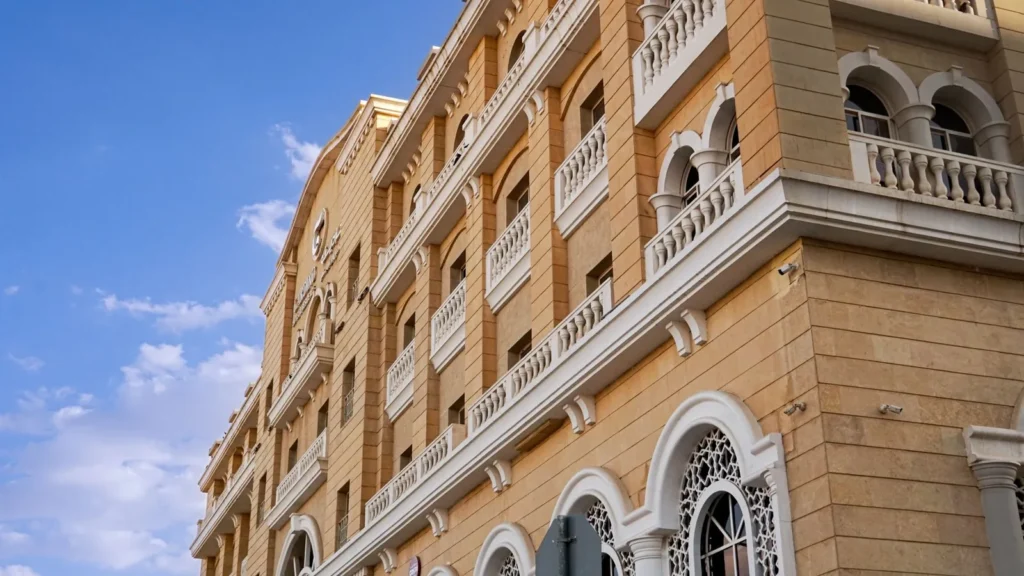
The palace was established in 1946 by order of King Abdulaziz and first served as a guesthouse. In 1958 it became Al-Zahir Elementary School, and in 2006 it was renovated and reopened as a museum of antiquities and heritage for Makkah Province. The site covers about 3,425 square metres, which makes it a compact museum rather than a sprawling campus, and that matters for how long you should plan to spend there.
The museum tells the story of the Makkah region from prehistory through the pre-Islamic period, the Prophet’s life, the development of the Grand Mosque and the founding of the modern Saudi state. It is the kind of place that rewards an unhurried hour or two, and it sits well away from the dense hotel districts around the Haram, which is why most visitors arrive by taxi or private car rather than on foot.
Is the Makkah Museum open in 2026?
This is the point where we have to be plain. The most recent official statement we could find on the museum’s status is a Museums Commission comment reported by Arab News on 28 September 2021, saying the museum had closed because of the pandemic and that the Commission was “hoping to reopen the museum to visitors as soon as possible” and giving it special attention. We found no later announcement on the Museums Commission website, which as published in October 2026 lists its flagship museums without mentioning Makkah Museum or Al-Zahir Palace at all.
A European heritage consultancy, Avesta Group, states on its own project page that the Ministry of Culture commissioned it to reorganise Al-Zahir Palace into a modern cultural institution with a new gallery concept on Makkah’s history of knowledge and education. That tells us a redesign has been planned or carried out, but the page gives no completion date and no opening hours, and a contractor’s portfolio is not an official opening notice.
So the position is: the building exists, it is a recognised public museum, and it has been the subject of a Ministry of Culture redevelopment, but whether the doors are open on the day you want to visit cannot be confirmed from the sources available to us. Treat any opening hours you see on map apps or third-party travel pages as unverified until an official channel confirms them.
How do I check the Makkah Museum opening arrangements before I go?
Because the status is uncertain, checking is not optional. The Museums Commission is the responsible body under the Ministry of Culture, and its site lists a contact telephone number and an info@moc.gov.sa email address. Asking the Commission directly, in writing, is the most reliable way to learn whether the museum is open, what the hours are, and whether entry is free or ticketed.
Your hotel reception can also telephone on your behalf. Hotel staff in Makkah field this sort of question regularly, and a local call in Arabic often gets a quicker answer than an email from abroad. Ask them to confirm three things: that the museum is open to the public, the days and hours, and whether groups need to book ahead.
If you book a driver through Makkah Cabs, add a note in the booking asking the driver to confirm with you before setting off if the museum appears closed on arrival. Our guide to what to do when a Makkah ziyarah site is closed explains how to agree a sensible plan B in advance so the outing is not wasted.
Where is Al-Zahir Palace and how do I get there?
The palace stands in the Al-Zahir district, on the northern side of Makkah along the road that carries the district’s name. It is outside the central Haram zone, so it is not somewhere you wander to between prayers; you need a vehicle. From the hotel towers around the Grand Mosque the journey crosses the city’s northern approaches, and traffic in that direction varies a great deal by time of day and season, so allow a generous buffer rather than planning the visit to the minute.
If you are staying in Aziziyah or another outlying district, the route is different again. Our article on Makkah hotel districts and how they affect taxi pickups describes how pickup logistics change depending on where you are based, and it is worth reading before you choose a departure time.
Give the driver the museum’s name in both English and Arabic, “Makkah Museum” and “متحف مكة المكرمة”, and mention “Qasr Al-Zahir”. Drivers know the palace as a landmark even if they have never had a passenger ask to go inside it, and the Arabic name removes any confusion with the newer museums near the Haram.
What will I see inside the Makkah Museum?
Saudipedia lists the museum’s halls in detail, and the list is useful for deciding whether the visit suits your group. The halls described are an antiquities hall covering rock inscriptions, fortresses and Hajj routes across the Kingdom; a prehistoric hall on early tools, agriculture and animal domestication; a geology and natural history hall for Makkah Province; and a pre-Islamic hall covering the founding of Makkah, its old markets, the early building of the Grand Mosque, the winter and summer trade journeys and the Year of the Elephant.
There is a Prophet’s Biography hall with excerpts from the Prophet’s life, a hall on the development of Arabic writing and calligraphy, a currencies hall tracing Islamic coinage through different eras, and a Hajj hall with photographs and maps of pilgrim routes, rest-stop fortresses and a model of the Holy Sites. A Grand Mosque hall follows the mosque’s construction phases from the Rashidun period onward and includes material on the Kaaba and its Kiswa.
Rounding out the list are a Saudi State hall with audiovisual material on the founding of the Kingdom, an education hall on the history of schooling in Makkah, a Makkah heritage hall of everyday objects such as desert tools, wicker goods and cooking and lighting implements, and a hall of Islamic art with jars, decorated dishes and copper candlesticks from across the Muslim world. Bear in mind that the Avesta Group redesign focused on Makkah’s history of knowledge and education, so the hall arrangement may have changed since Saudipedia’s description was written. The building’s own history as a school gives that theme a nice logic.
How is this different from the other museums in Makkah?
Makkah now has several museums, and they are easy to confuse. The Exhibition of the Two Holy Mosques Architecture near the Kiswa factory concentrates on the Grand Mosque and the Prophet’s Mosque as buildings. The International Museum of the Prophet’s Biography is a modern, multilingual, interactive museum close to the Haram. The Clock Tower Museum is about astronomy, time and the clock itself.
The Makkah Museum at Al-Zahir Palace is the broadest of them: it is the only one that attempts the whole regional story from geology and prehistory through to the modern state, and it is the only one housed in a historic royal building. If you have time for just one museum and your interest is specifically the Prophet’s life, the biography museum is the better fit. If you want context on the land, the trade routes and the city before and after Islam, Al-Zahir is the one, provided it is open.
It also tends to be quieter. The Haram-side museums sit in the flow of pilgrims and receive heavy footfall; the palace is a destination in itself and you will usually have space to read the labels.
Who should visit, and how long should we allow?
The museum suits adults and older children with an interest in history, and it suits anyone who wants a calm, air-conditioned couple of hours away from the crowds. Because the collection is arranged in themed halls, families can skip the galleries that do not interest the youngest members and concentrate on the Hajj model, the coins and the heritage objects, which tend to hold children’s attention.
Allow time generously. The site is small enough that an hour covers it at a brisk pace, but the halls are text-heavy and a reader who stops at every panel will want longer. Build in the walk from the car, the possibility of a short wait at the entrance, and the return pickup. Do not schedule the visit tightly against a prayer time at the Haram, because the journey back passes through traffic that thickens before each congregational prayer.
Elderly visitors and anyone using a wheelchair should ask when confirming the opening arrangements whether step-free access is available throughout; we could not verify the building’s accessibility provision and a 1940s palace may have thresholds or steps. Our piece on planning a Makkah visit for mixed abilities covers how to split a group so slower walkers are not rushed.
A fictional family planning an Al-Zahir Palace museum visit
This is a fictional scenario, not a real customer. Imagine a family of five from Birmingham on an Umrah trip, with two teenagers and a grandfather who tires quickly. They have finished their main rites, have a free morning on their third day, and the teenagers have asked to see “something about the history, not another mall”.
The night before, the mother emails the Museums Commission and asks the hotel reception to telephone the museum. The hotel comes back first: the museum is open that week, mornings only, with a midday closure. She books a Makkah Cabs car for a mid-morning pickup from the hotel frontage, puts “Makkah Museum, Qasr Al-Zahir, driver to confirm museum is open on arrival” in the notes, and chooses a waiting car so the grandfather is not left standing in the heat while they look for a return taxi.
On the day they spend about ninety minutes inside, concentrating on the Hajj hall and the coins because that is what the teenagers respond to. The grandfather sits in the Saudi State hall and watches the audiovisual material while the others finish. They are back at the hotel comfortably before the midday prayer. Had the hotel’s call revealed a closure, the family’s plan B, agreed in advance, was the Exhibition of the Two Holy Mosques Architecture instead.
What should a taxi booking for the museum include?
Three decisions make the difference between a smooth visit and a frustrating one. First, where you will be collected: name the hotel, the tower if there are several, and the frontage or assembly point you will use, as explained in our guide to Makkah hotel pickup points. Second, whether the vehicle waits or you book a separate return; for a museum visit of uncertain length, a waiting car is usually the simpler choice, while a fixed return pickup suits a group that has already confirmed the hours and knows when it will finish.
Third, what happens if the museum is closed when you arrive. Write the plan B into the booking notes so the driver does not have to improvise. A realistic alternative is one of the Haram-side museums, or a short detour to another northern-district site on the way back. Keep it to one alternative; a long list only slows the conversation at the kerb.
If you want a quote before you commit, the live price preview in the booking tool shows what the journey includes. Our article on what the Makkah taxi price preview means walks through it.
What are the rules for photography and conduct inside?
We could not find a published photography policy for the museum, so ask at the entrance. Museums in Saudi Arabia commonly permit personal photography without flash in general galleries while restricting it in particular rooms, but that is a general observation, not a rule we can confirm for this site. Do not photograph staff or other visitors without permission, and keep tripods and large bags in the car.
Dress as you would anywhere in Makkah: modest clothing for everyone, and women should wear the abaya or equivalent loose covering that is customary in the city. Speak quietly, keep children close in the heritage hall where objects are fragile, and follow any one-way route the staff indicate.
If the museum is ticketed when you visit, carry small change or a card; we cannot tell you whether entry is free, and it would be wrong to guess.
Can the museum be combined with other northern Makkah stops?
Yes, and this is where a private vehicle earns its keep. The northern side of the city holds Jannat al-Mualla cemetery and the historic mosques near it, and a loop that takes in the museum and one of those sites on the way back is a sensible half-day. Keep the order flexible: if the museum opens later than you were told, visit the other stop first.
Do not try to add Jabal al-Nour or the Hira Cultural District to the same half-day unless everyone in the group is fit and the museum has confirmed hours. The districts lie in different directions and the combined outing becomes long. Our guide to ordering stops on a multi-stop Makkah visit explains how to sequence an outing so the fixed-time stop comes first.
A second fictional scenario: the researcher with an appointment
Again, this is fictional. A postgraduate student from Malaysia studying the history of education in the Hijaz wants to see the museum’s education hall and, ideally, speak to a curator. She writes to the Museums Commission three weeks before travelling, explains her purpose, and asks whether a staff member could meet her. She receives a reply confirming the museum’s public hours and suggesting a morning when a curator is available.
She books a one-way taxi to the museum for the morning of the appointment and does not book a return, because she does not know how long the conversation will last. When she finishes, she uses the booking tool from the museum forecourt for the ride back. This is the right structure for an open-ended visit: fix the arrival, leave the departure open. The approach is described in more detail in our piece on booking the ride back after a Makkah visit.
Checklist before you set off for the Makkah Museum
- Confirm the museum is open on your date through the Museums Commission or a hotel phone call; do not rely on map-app hours.
- Ask whether entry is free or ticketed, and whether groups need to book.
- Agree a plan B stop and write it into the taxi booking notes.
- Give the driver both names: Makkah Museum and Qasr Al-Zahir, with the Arabic.
- Choose a waiting car or a fixed return pickup, and name the pickup point at your hotel precisely.
- Carry water, modest clothing and a small bag only; leave large items in the vehicle.
- Keep the visit clear of the pre-prayer traffic peaks around the Haram.
Why this visit is worth the effort
Most pilgrims leave Makkah having seen the Grand Mosque and little else of the city’s story. The Makkah Museum at Al-Zahir Palace is one of the few places that puts the Haram into its wider setting: the land, the trade routes, the pre-Islamic town, the long history of pilgrim travel and the buildings that housed Makkah’s first modern schools. It is a modest museum in a handsome building, and if it is open when you are in the city it deserves a morning.
When you are ready to plan the journey, book your car with Makkah Cabs, note the museum’s name in both languages and your plan B in the booking, and check the opening arrangements the day before. We will get you to the palace gate; the Museums Commission decides whether the doors are open.
Sources reviewed 15 October 2026: Saudipedia (Makkah Al-Mukarramah Museum; List of Public Museums in Saudi Arabia), Museums Commission of the Ministry of Culture, Arab News reporting of Museums Commission statements (28 September 2021; 3 April 2023), Avesta Group project page (Ministry of Culture client). The museum’s current opening status, hours, ticketing and accessibility could not be verified on an official page and readers should confirm with the Museums Commission before travelling. Photo: Du_ Black / Pexels.