
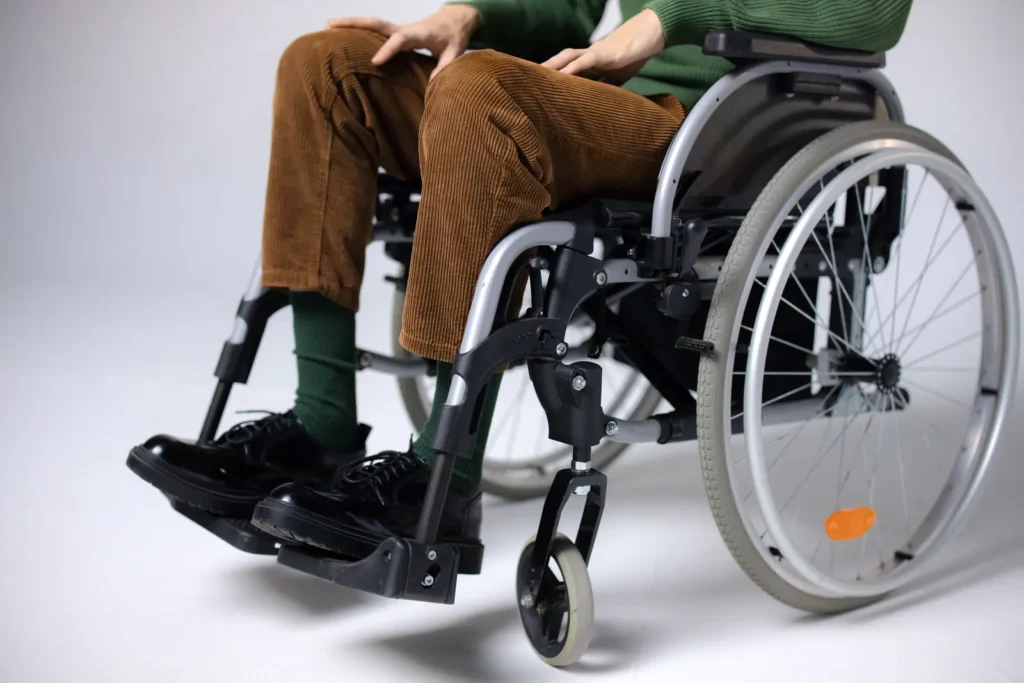
Arranging wheelchair assistance at the Grand Mosque involves more than choosing a car from your Makkah hotel. You need a workable path from the hotel to the mosque, the appropriate service inside, and a plan for leaving afterwards. Each part may involve a different provider or family responsibility.
This guide focuses on assistance within the Grand Mosque and the connection with your accommodation. It helps you distinguish service types, ask clear questions and coordinate companions without assuming that a taxi booking includes a wheelchair, cart, pusher or escort. Current service availability, eligibility, access and charges must be confirmed with the responsible authority or official service.
Separate three arrangements before booking anything
The first arrangement is the journey from your hotel. Identify the passenger’s boarding needs, the equipment being carried and the lawful vehicle meeting point. The second is movement between that point and the relevant mosque service or entrance. The third is the assistance or equipment you intend to use inside.
A family can organise one part successfully while leaving a gap in another. For example, a car may carry a traveller’s folded chair, but someone still needs to help that traveller reach the agreed entrance. Alternatively, a cart reservation inside the mosque may be useful, but it does not collect the passenger from their hotel room.
Write down who is responsible for each part. Ask the traveller what they can manage and what support they want, rather than deciding entirely on their behalf. A clear description of the task is more useful than a general assurance that assistance will be available somewhere when you arrive.
What official sources establish about on-site services
Saudi Press Agency’s March 2026 report describes a unified mobility platform through which visitors can reserve carts for Tawaf and Sa’i. It also describes digital guidance for routes, entrances and services. This establishes that on-site mobility arrangements have an official system; it does not establish an individual traveller’s confirmed reservation. Read the official report on Grand Mosque digital services.
The national portal’s Tanaqol service description lists different wheelchair or cart choices, including manual chairs with or without an assistant and golf carts. It describes selection of service, date and time, and payment where applicable. Consult the current official service for the options it offers to you; do not treat every listed type as interchangeable.
The mosque authority’s services for elderly visitors and people with disabilities describes designated routes, equipped entrances and support areas. These details help you ask informed questions, but follow current on-site signs and staff directions. A historic gate description is not permission to use a route regardless of present management arrangements.
Do not combine separate descriptions into an unsupported promise that all chairs, carts and attendants are free, always available or supplied in one location. Ask which exact service applies to your requirements and how it is arranged. This guide deliberately avoids quoting prices, quantities or fixed collection gates that could mislead a visitor.
Choose by the person’s needs, not the equipment name
Start with the traveller’s own account of their mobility. Can they walk a short distance, manage a slope or transfer between seats? Do they need to remain in their personal wheelchair? Are they comfortable with an attendant or do they prefer a family companion? Share the relevant functional requirement with the official service.
A manual chair and an electric cart solve different movement problems. A chair may need someone to push it; a service involving an attendant has its own scope. A cart may have boarding and seating requirements different from the traveller’s personal chair. Ask about the actual arrangement rather than choosing from a name or picture alone.
If the person cannot transfer, state that clearly before considering an option that would require it. Do not assume a companion or member of staff will lift the traveller. Seek confirmation of a suitable arrangement from the responsible service and follow the traveller’s professional advice where relevant. This article provides no lifting or clinical instructions.
Describe any communication need that affects using the service, such as understanding the attendant’s instructions or discussing an arrangement in a particular language. Ask what support can be provided. The existence of multilingual guidance somewhere in the mosque does not guarantee a specific language for every service at every time.
Manual chair, attendant or cart: clarify the scope
A traveller using their own chair
Ask the authority about the permitted route and relevant arrangements for your intended visit. Identify who will assist where needed and whether that person can manage the whole task. A familiar chair can be valuable, but owning one does not remove the need to understand current movement directions inside the mosque.
Think about the chair’s use before arrival and after departure as well as inside. If the traveller depends on it between the hotel room and the car, it must remain available at the appropriate moments. Do not base the departure plan on equipment being somewhere else with a relative who may have left the group.
A manual chair supplied on site
Confirm how it is obtained, whether it is reserved or allocated on arrival, what identification or conditions apply and where it must be returned. Ask whether the arrangement includes an assistant or requires your own companion. Keep these details together so nobody mistakes the provision of a chair for the provision of personal assistance.
If the traveller needs support before reaching the collection point, solve that section separately. A promise to seek a chair after arriving is not a complete plan for someone who cannot walk to the service location. Tell the official service about this need and ask what arrangement is possible.
A service with an attendant or an electric cart
Ask what the booking covers: the activity or route, the passenger arrangement, the attendant’s role where applicable and the start and finish locations. Confirm whether companions can accompany the traveller and under what conditions. Do not assume that an assistant will remain with the family beyond the booked service.
For an electric or shared cart, ask about boarding, seating, companions and any relevant restrictions. Obtain the current cost and booking terms from the official service. A description of one type’s charges does not establish the charge or eligibility for another type, or guarantee that a particular option is available on your chosen date.
Use the official booking route and keep the confirmation
Begin from the authority or national portal rather than an unsolicited message or a third-party page claiming to guarantee access. Follow the current link to the service and review the option before submitting information. If the page cannot be opened or the process is unclear, seek help through the official contact route instead of guessing the required steps.
Check the date, time, service type and traveller details displayed in the booking. Where payment is applicable, read what the charge covers and retain the receipt. A payment attempt, a bank notification and a completed service confirmation are not necessarily the same event. Verify the booking’s own status before arranging the rest of the visit around it.
Keep the confirmation accessible to the person accompanying the traveller. If another relative booked remotely, ask how the confirmation is presented and whether the person making the booking must be present. Do not assume that a screenshot can be transferred freely or that one person’s booking covers additional passengers.
Read amendment, cancellation and refund conditions from the service you selected. This guide does not promise a free change, a refund period or an automatic replacement when timing changes. If an essential need remains unresolved, ask for clarification before relying on the arrangement.
If the digital process is difficult
Ask a trusted companion to help read the official options while the traveller makes the relevant decisions. Check the service name and details together before submitting. Do not allow difficulty using a phone to turn into acceptance of an unexplained booking whose equipment or assistance does not meet the person’s needs.
If a screen or payment step fails, record the booking status before trying again. Contact the official service for clarification where necessary rather than assuming a second submission will resolve the issue. Keep any reference supplied so that the enquiry concerns the actual attempt, without sharing sensitive payment information in a public or informal channel.
If you cannot establish that the arrangement is confirmed, leave it marked as unresolved in the family plan. Ask the service what alternative official procedure is available. A relative’s intention to sort it out on arrival is not equivalent to confirmation, especially when the traveller needs assistance before reaching the relevant location.
Get reliable directions for the current visit
Use the authority’s information to identify the service, then ask about the route that applies on your day. Do not rely entirely on somebody’s photograph from an earlier visit. Signs, movement management and access may direct people differently from the route a friend used previously.
A February 2026 official readiness report describes interactive maps and digital guidance for service locations, entrances and exits. Use such guidance together with staff instructions. A map is an aid to navigation, not an assurance that every route is appropriate for your traveller’s equipment or unrestricted at that moment.
Before separating, agree how companions will communicate and where they will reunite under the service’s actual arrangements. If an entrance or finish point is changed, update the group. An old meeting instruction can become confusing when one person follows current staff directions and another waits elsewhere.
Describe locations by their official name or current sign where possible. A vague message saying near the entrance may be insufficient in a large complex. Ask staff for help if your understanding is uncertain; walking the traveller repeatedly between guessed points is not a sensible substitute for obtaining directions.
Connect on-site assistance with the hotel journey
Tell the hotel what assistance is arranged and ask about the route from your room to the vehicle meeting point. If you need a chair or companion for that section, confirm it separately. A hotel desk may help communicate, but do not assume that reception supplies personal care or arranges the mosque service automatically.
For the car, describe the passenger’s vehicle needs and equipment. A traveller who can transfer to a conventional seat with a folded chair carried as luggage has different requirements from one who must remain seated in their wheelchair. Use our guide to describing a wheelchair or walking aid for a Makkah car for that separate transport question.
Ask what lawful drop-off is possible and how the traveller will reach the relevant on-site service from there. Do not assume the driver can stop at the service desk or accompany the person into the mosque. Any escort or additional assistance must have an explicitly confirmed provider and scope.
Our hotel frontage and meeting-point guide helps you distinguish the hotel address from the actual collection place. Apply the same care at the destination, where a car point and an on-site mobility point may be different locations.
Decide companion responsibilities respectfully
The traveller should have a say in how help is offered. Ask whether they want a relative to handle booking messages, communicate with staff or stay close throughout. Independence and support are not opposites; a good plan provides the assistance the person wants without taking every decision away from them.
Allocate tasks clearly. One companion might carry the confirmation, another handle a day bag, and another communicate with the hotel. Avoid expecting the person pushing a chair to perform every task simultaneously. If the arrangement requires more help than the party can reliably provide, seek a suitable service rather than overestimating a relative’s capacity.
Discuss breaks and changes in pace before the visit. Ask the traveller how they will tell you they need to pause or reconsider. Follow their medical advice where relevant, and avoid making the day a test of endurance. A practical transport guide cannot establish how much activity is appropriate for an individual.
Keep sensitive information limited to what the service needs to arrange the task. A concise functional description may be enough for a transport enquiry; medical information belongs with appropriately responsible professionals or services where required. Do not publish the traveller’s diagnosis in a group message merely to explain a simple movement requirement.
Plan the finish as carefully as the start
Ask where the booked service ends and what happens to any supplied equipment. If a chair must be returned there, identify how the traveller will continue to the next meeting point. The end of on-site assistance is not necessarily the end of the walking or companionship requirement.
Arrange the hotel return around a realistic sequence: finishing the service, obtaining the traveller’s own equipment if relevant, following current directions and reaching the agreed car point. Do not set a fixed journey time from an assumed duration for Tawaf or Sa’i. Ask the service about its arrangement and leave the religious practice questions to qualified guidance.
If some relatives finish earlier, make sure they do not leave with the chair, confirmation or belongings that the traveller still needs. Decide whether they will remain nearby or return separately. Everybody should know which companion stays with the person until the next handover is complete.
For communicating with reception about the return, see our hotel desk handover guide. Identify the actual booking and collection point. A message that someone is nearly finished is not itself an amended pickup time or confirmation that a car is waiting.
Two different needs, two different plans
An adult who walks short distances but needs on-site help
The person explains the sections they can manage and chooses a service suitable for the longer movement inside. Their companion checks the official collection and finish points, then assesses the paths before and after. They do not assume that needing a cart for one activity means every other part of the day is covered.
The vehicle arrangement is made separately. If the actual drop-off leaves a section the person cannot manage, they seek an alternative workable arrangement before travel. The plan succeeds by addressing the gap, not by hoping the traveller will cope once the family is already at the destination.
A traveller dependent on a personal wheelchair
The traveller and companion ask about use of that chair on the relevant routes and confirm the vehicle requirements. They do not switch to an unfamiliar option merely because its name appears in a booking menu. Boarding, support and companion arrangements must fit the person’s requirements.
The chair remains part of the plan from the hotel room to the return. Any change of equipment is discussed with the responsible service, including what happens to the personal chair. Nobody leaves it in a location based on an assumption that collection, storage or retrieval will be permitted.
Prepare a concise assistance plan
Keep the service name and confirmation, start and finish instructions, companion responsibilities, hotel contact and vehicle details together. Separate confirmed arrangements from questions still waiting for an answer. This is easier for the whole party to use than a collection of general accessibility articles that do not describe the actual day.
Review the plan with the traveller rather than only with the person making payment. Confirm that they understand and are comfortable with it. If they identify a difficulty, address it while there is time to ask the responsible service, instead of presenting a completed plan that they feel obliged to accept.
When the on-site and hotel arrangements are understood, request the Makkah hotel journey with the specific passenger and equipment needs. Ask for confirmation of any special arrangement. Mosque mobility services, personal assistance and transport each need their own clear agreement so they form one workable day.
Official service sources checked on 27 September 2026. Confirm current availability, eligibility, charges, routes and requirements with the responsible authority or official service. This is practical planning guidance, not medical or religious advice. Photo: cottonbro studio / Pexels, under the Pexels licence. Generic studio wheelchair detail; not Grand Mosque equipment or a Makkah Cabs customer or service.