
A hotel shuttle can be a useful part of a Makkah stay, but the words shuttle to the Haram leave several important questions unanswered. You need to know where it actually stops, how you return, whether everyone can board comfortably and what applies on your travel dates. A private taxi has its own limits, including lawful vehicle access and a remaining walk.
The choice becomes clearer when you compare complete journeys from your room to the place you intend to reach, then back again. This guide is about a hotel’s own guest transport, rather than the public Makkah Bus network. It helps you assess an advertised amenity, ask useful questions before booking accommodation and choose additional transport for the journeys the shuttle does not cover.
First identify which shuttle the hotel means
A hotel’s transport description may refer to a dedicated guest bus, a local service, an airport service or assistance arranging paid transfers. These are different products. Do not rely on a shuttle icon or a search filter without reading the property’s own explanation. Confirm the departure point and destination of the service you expect to use.
For example, voco Makkah’s official property page advertises a guest shuttle towards Masjid al-Haram. This is evidence of that property’s described amenity, not a timetable for other hotels or a guarantee of the arrangements throughout your stay. Ask the property for its current guest instructions before relying on the service.
Similarly, Hilton’s Makkah and Madinah travel page lists a shuttle service for Hilton Hotel & Convention Jabal Omar Makkah. That description should lead you to a property-specific enquiry. It does not establish that every Hilton hotel operates the same bus, uses the same stop or admits guests from another property.
If reception suggests a city bus instead, evaluate that as public transport rather than a hotel amenity. Our Makkah Bus comparison addresses that separate network. Keeping the names straight prevents you from choosing a room on the assumption that the hotel will provide transport it has never offered.
Compare the whole journey, including the walk
Start at the room, not the hotel’s map pin. The journey may include a lift, a walk through the property, a queue at the departure point, boarding, the road section and a walk from the drop-off towards your intended entrance. Each component matters to someone who tires easily or travels with small children.
Ask reception to name the actual drop-off and show it on a current map. Then identify the route on foot from that point. A description such as near the Haram is useful background but does not tell you about crossings, slopes, steps or the entrance you will reach. Ask for practical directions rather than trying to calculate everything from a straight-line distance.
Make the same enquiry for a private car. It may serve a different accessible point, but a booking does not grant access through managed roads or permit a stop at any chosen gate. Request the likely lawful arrangement, then assess the remaining pedestrian section. Choose the option that suits your party’s actual movement needs rather than assuming that a taxi eliminates all walking.
Our Makkah hotel district guide explains why your exact property matters when planning a pickup. Use it alongside the hotel’s current instructions. A district name alone cannot show the route from a particular room or entrance to a particular bus departure point.
Ask about service patterns without assuming a timetable
Does the hotel operate departures at published times, at an approximate frequency, or when a vehicle is ready? Those arrangements create different expectations. A service advertised as operating throughout the day does not necessarily mean a bus will be outside when you arrive. Ask how guests find the next departure and where any current schedule is displayed.
Ask what changes around busy periods and what guests should do if a departure is full. You are looking for a procedure, not a promise that congestion never happens. If the answer depends on daily instructions, find out who issues them and how you will hear about changes while staying at the hotel.
Distinguish departure frequency from journey duration. Even a frequent shuttle can spend time travelling or waiting under managed road conditions. Avoid planning a commitment around a best-case estimate someone gave for a quiet day. Tell reception which arrival constraint matters to you and ask how early they advise you to join the hotel’s process on that date.
Do not impose a universal number of minutes on every journey. Your property, party, chosen entrance and the day’s arrangements affect the plan. After arrival, familiarise yourself with the departure procedure before the first trip that has a firm deadline. An unhurried enquiry can resolve a misunderstanding that would be difficult to address when everyone is already waiting.
The return arrangement deserves equal attention
An outbound shuttle is only half the service you need for a return visit. Ask whether collection uses the same location, how the hotel’s vehicle is identified and whether a timetable or queue applies there. Take a note of the location and the hotel’s contact details in a form your group can access without depending on one phone.
A landmark description should be specific enough to distinguish your collection area from another property’s arrangement. Ask staff to explain the approach from the direction in which you will leave. Do not assume that following the crowd will take you to your hotel’s vehicle or that every bus in a similar colour serves the same passengers.
Agree a family meeting point before anyone separates. Choose a location consistent with current directions and avoid making a stationary gathering in a moving pedestrian route. If some adults intend to return earlier, discuss how they will identify the service themselves. One person holding all the details can become a problem when the party splits.
If you plan to use a private car for one return, communicate that clearly within the party. Do not leave another adult waiting for you at the shuttle collection area. A mixed transport plan can work well, provided everybody knows which journey they are taking and has the information needed to complete it.
Check boarding and equipment needs directly
Describe what each traveller can manage. Can the person climb the vehicle’s boarding steps? Do they need to remain seated in a wheelchair? Can they walk from the stop to the entrance and back? These questions are more informative than asking only whether the bus is accessible, a word that different people may use differently.
Ask about the specific vehicle or service expected on your dates, and what happens if it changes. A property may provide information about its amenity without guaranteeing one vehicle for every departure. If a particular boarding arrangement is essential, ask how the hotel confirms it and what alternative it recommends when it cannot be supplied.
For a pushchair, ask whether it must be folded and whether the party can manage boarding while caring for the child. Do not presume that a shuttle carries child restraints or that a private vehicle will have the equipment you require unless it has been requested and confirmed. Vehicle suitability is a separate decision from whether the route is convenient.
Ask before bringing large bags or unusual equipment on a guest shuttle. A service intended for visits towards the mosque may not be designed for a hotel move, airport luggage or a bulky shopping collection. Describe the load and seek a clear response instead of arriving with it and asking the driver to solve the problem.
Costs: compare the accommodation decision fairly
A shuttle described as included can make one hotel attractive, but the room rate is still only part of your stay’s cost. Compare the accommodation you would actually buy, its cancellation terms and the extra transport you are likely to need. Do not assume that a lower room rate always produces a cheaper or easier overall stay.
List journeys outside the advertised shuttle’s purpose: arrival, departure, another hotel, a cultural attraction or a family meal elsewhere. Obtain appropriate quotes for those journeys separately. A hotel guest service towards the Haram should not be treated as a general vehicle at your disposal unless the hotel explicitly offers that arrangement.
Also consider the value of your party’s energy and flexibility without pretending to price them precisely. If using a shuttle requires boarding steps that a relative cannot manage, a nominal saving may not meet your needs. Conversely, if everyone is comfortable with the confirmed service, booking a private car for every routine journey may add expenditure with little benefit.
A balanced plan can include the shuttle for suitable visits and confirmed additional transport for others. Make that choice from actual requirements, not a rule that one option must be used throughout the stay. Keep hotel transport charges, if any, and private transfer terms distinct so you can see what each purchase covers.
Three practical ways to make the choice
A couple considering a hotel outside the central area
Before buying a room, the couple ask for the hotel’s current shuttle destination, the route on foot afterwards and the return instructions. They compare those details with their own walking ability and planned activities. Their question is whether this particular amenity makes this accommodation suitable, rather than whether any hotel outside the centre is a good or bad choice.
If the reply is incomplete, they ask for clarification or choose accommodation they can assess more confidently. They keep any transport promises relevant to the booking in writing. After arrival, they verify that the procedure still matches the information received and adjust their first day’s plan if staff report a change.
A family with a child and an older relative
The family separates boarding needs from walking needs. One adult may cope with the bus steps but struggle after a long walk; another may need help carrying a folded pushchair. They ask about both parts of the journey and identify who can provide family assistance without leaving the child unattended.
They do not buy a private transfer merely because it sounds easier. First they ask what point a car can reasonably serve and whether the vehicle arrangements suit the traveller. They then choose the option that addresses the actual difficulty. If family members use different options, they agree where to reunite rather than expect both vehicles to reach the same place.
Friends with different return times
The friends establish whether the guest service permits independent returns and how each person identifies it. They share the hotel name and instructions before leaving. The friend who wants a longer visit can stay without keeping the others waiting, provided each knows the current return procedure and feels comfortable using it.
If one friend requests a private collection, that booking has its own place and time. They avoid using the shuttle’s name as the taxi meeting instruction without checking the actual point. The arrangements are compatible when described clearly; they are not automatically interchangeable because both ultimately lead to the same hotel.
Verify information before and during your stay
Use the property’s official contact channel for questions that affect your accommodation decision. State your dates, the number of travellers and the specific requirement. A general enquiry may produce a general answer. Asking whether a wheelchair user must transfer at boarding, for example, is more useful than asking whether the hotel is good for older guests.
Online reviews can suggest questions but should not set your timetable. A guest describing a convenient drop-off last season may be accurate about their experience while the current arrangement is different. A photograph of a bus at an entrance is also historical evidence, not permission for that stop on your date.
If two sections of a hotel website seem inconsistent, ask the property to distinguish the services concerned. A reference to a Haram shuttle and a generic local-area or airport shuttle field may describe different things. Do not guess which wording overrides the other, or infer that an amenity has disappeared solely because of a website label.
During the stay, check current instructions with reception rather than continuing to rely on a saved screenshot when staff report changes. Ask where notices appear and how to contact the hotel from the return area. Our guide to working with your hotel reception on a pickup covers that communication when a separate booked car is involved.
If accommodation comes through a group organiser
A package may include transport organised by an agent or group leader as well as the hotel’s own guest service. Ask which arrangement you will actually use and who is responsible for its instructions. Do not assume that a bus booked for a group follows the same procedure as the hotel’s ordinary shuttle simply because both depart near the property.
Check whether your group is expected to leave together and how independent travel affects the organiser’s plan. Someone who chooses a separate car should tell the organiser, particularly if a headcount will otherwise treat them as missing. That notification does not cancel or amend a paid journey automatically; the relevant transport terms still need attention.
If the package description promises a particular service, keep the description and direct your clarification to the party supplying it. Reception can explain its own amenity but may not control a separate contracted bus. Identifying that responsibility early prevents the hotel, agent and traveller from each assuming that another person has confirmed the arrangement.
For a mixed group, discuss essential movement needs before the accommodation is finalised. A solution that works for most members may leave one person dependent on help that nobody has arranged. Seek a specific workable response for that traveller rather than accepting a general assurance that groups usually manage comfortably.
Keep the plan simple enough to use
Save a short journey note for the family: the hotel’s departure point, the expected destination area, the pedestrian directions, the return collection procedure and the hotel’s contact details. This is easier to use on a phone than a long document containing every possible transport option. Keep it updated when you receive new instructions.
Make sure the person least familiar with the arrangements can understand the note. If it relies on a local landmark they have never seen, ask reception to show a map or image. Record the hotel’s full name, since similar names or different towers can cause confusion when asking someone for assistance.
Keep an alternative decision rather than an assumed instant backup. If the service does not meet a traveller’s needs, know whom to contact and what would have to be confirmed before another journey can take place. A private booking platform is not evidence that a suitable vehicle will be immediately available when you change your mind.
Review the choice after an unhurried first journey. You may find the confirmed shuttle suits the family well, or that one component needs a different arrangement. Use what you learn to plan later trips without turning one difficult or easy journey into a guarantee about every day of the stay.
Request additional transport for a specific journey
For a car, give the actual hotel, intended destination, date, preferred time and passenger requirements. Explain any walking or boarding limitation and ask what arrangement can be offered. Use the hotel frontage and meeting-point guide to distinguish where you are staying from where a vehicle can collect you.
When your party needs a journey beyond the hotel’s confirmed shuttle, request a Makkah transfer with those details. Treat special equipment, assistance, waiting and access questions as matters for confirmation. The best transport plan is the one whose arrangements you understand and whose complete journey your travellers can manage.
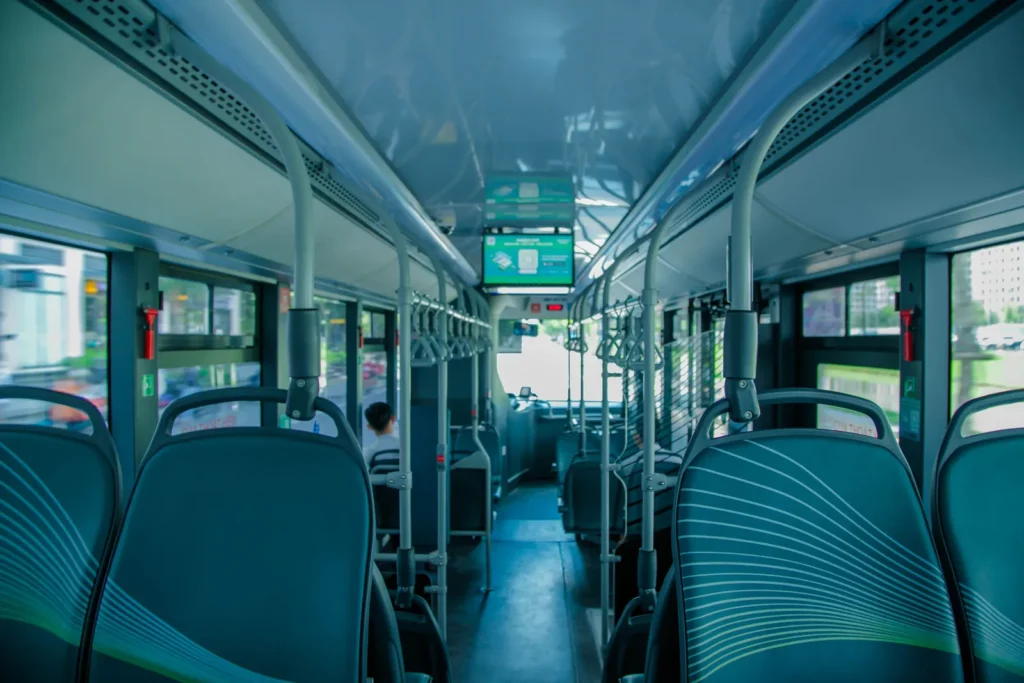
Hotel source information checked on 27 September 2026. Shuttle patterns, stops, access and guest eligibility must be confirmed with the property for your dates. Photo: Thanh Long Bùi / Pexels, under the Pexels licence. Generic bus interior; it does not show a Makkah hotel shuttle or a vehicle supplied by Makkah Cabs.