
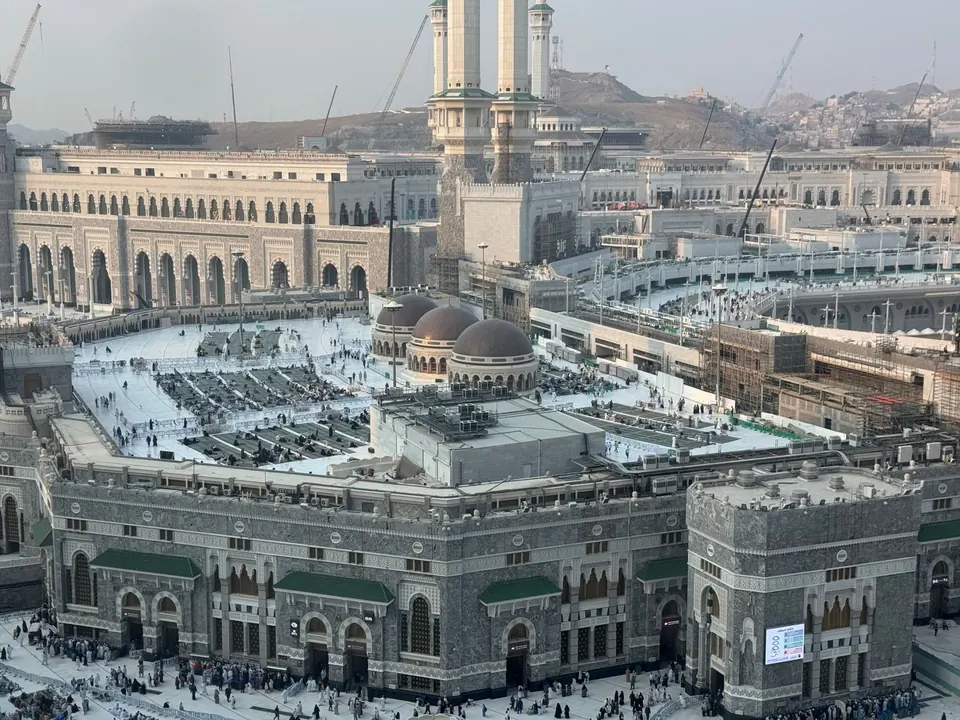
If you are already in Makkah and wondering what to do should an alert or incident interrupt your stay, this Makkah emergency guidance for visitors begins with one rule: do what Saudi officials, security officers and Grand Mosque staff tell you, at once, even when it upsets your plans for the day. After that, reach the people you are travelling with, take updates only from official channels and keep your passport close. Below you will find what official sources are publishing as of 15 October 2026, how to act in the streets, at the Haram and in your hotel, which numbers to save, and how to think about the road to the airport.
Nothing here is a forecast or a news summary. Published guidance can be revised overnight, so read every date in this guide as a snapshot, and open the live sources yourself each morning and again before any airport run.
Makkah emergency guidance for visitors: where things stand on 15 October 2026
The UK Foreign, Commonwealth & Development Office (FCDO) last revised its Saudi Arabia travel advice on GOV.UK on 13 October 2026. It records that, from 13 July onwards, the Houthis, whom it describes as “a military group in Yemen”, have fired missiles and drones at several locations inside the Kingdom. Its most recent change note refers to regional tensions and to military zones.
A further passage concerns Riyadh’s King Khalid International Airport: after an incident there on 10 October 2026, the same advice asks British nationals not to go near it until it has been made secure, and to act on guidance from Saudi officials. Riyadh is far from the Makkah region, yet the episode shows how fast guidance about airports can move.
Insurance is worth a moment of your time today. The Foreign Office cautions that a policy may be invalidated by travelling against its advice. Visitors insured outside the UK should look for the equivalent clause in their own policy wording and ring the insurer if the position is unclear.
Is Makkah named in the current warnings?
No. The British list covers the strip of land within 10km of the border with Yemen, where it advises against all travel. Separately, it advises against all but essential travel to four provinces (Aseer, Riyadh, Najran and Jizan), to three cities (Taif, Jeddah and Dammam) and to every Saudi airport apart from Medina International Airport.
Makkah city does not appear, and neither does Madinah city or AlUla. Please do not read that as a statement that any city is risk-free; it simply means the published list did not name them on that date. Two entries on the list touch a Makkah stay directly. Jeddah is the gateway most visitors use, through King Abdulaziz International Airport, and Taif is a favourite mountain outing from the city. If a Taif day trip is on your wish list, check the live wording first and ask yourself honestly whether it is essential.
Other governments use their own scales. On 15 October 2026 the US State Department advisory stood at Level 3, “Reconsider travel” (dated 12 October 2026), and invites US citizens to join its STEP alert scheme. Australia’s Smartraveller asks Australians to reconsider their need to travel to the country as a whole, and Canada’s travel.gc.ca (updated 11 October 2026) recommends avoiding non-essential travel. Whatever your passport, your own foreign ministry’s advice is the one that governs your consular support and, very often, your insurance, so find it and sign up for whatever alerts it offers.
What to do during an alert in Makkah when you are out in the streets
According to GOV.UK’s regional risks section, local authorities’ directions come first, and Civil Defence may push early warnings to phones in the places concerned. If one reaches your phone, read the whole message and follow what it actually instructs, not what someone nearby assumes it means.
Where sheltering is advised, the British guidance says to remain inside or to head for the closest safe building or official shelter. It suggests that a stairwell in the middle of a building, or a room with few outside walls and windows, may give extra protection, and it identifies debris falling after interceptions as the main danger, which is why a solid structure is the safest place to be.
On a Makkah street that translates into simple actions. Step into the nearest sturdy building instead of pressing on to your restaurant or shop. Keep clear of glass shopfronts. Wait until officials or a further official message tell you that normal movement can resume. If you happen to be in a car, let the driver and any police officer direct what happens next, and never urge a driver to go round a closure.
Inside or near the Haram when instructions change
Within the Masjid al-Haram and its courtyards, directions come from security personnel and the mosque’s own staff. Their word outranks any wish to complete a ritual in a certain place, to reach a favourite gate or to wait for a relative. Questions about how an interrupted act of worship should be completed belong with qualified scholars and official religious guidance; this guide does not offer rulings.
Some exits may be closed and others opened for crowd flow. Go where staff point, hold children by the hand and move at the speed of those around you. Turning back against the stream to search for a lost companion tends to slow everybody down. If your group splits, keep walking with the crowd until you reach a quieter space, then put your agreed regrouping plan into action.
A gate number or an indoor landmark is a pedestrian reference, not somewhere a car can pull in. Our article on regrouping with companions using Grand Mosque gates and the official map shows how to describe your position clearly without trusting an outdated screenshot.
Why a meeting point and a fallback matter so much here
Families often settle a meeting place only after someone has gone missing, which is the hardest moment to agree anything. Settle it over breakfast instead. Pick a main spot outside the mosque that every member can find unaided, such as your hotel lobby, and a second spot in case the first becomes inaccessible. Write both down, with the hotel’s full name and the tower name if the complex has more than one.
Agree how phones will be used as well: who rings whom first, and what happens if the network is congested. A brief text often goes through when a voice call fails. Older relatives and children should carry a small card showing the hotel, a family mobile number and any medical needs, ideally in Arabic as well as English.
The habits described in our guide to keeping a family group on time with a shared return point were written for ordinary outings. In a disruption they become your safety net.
Sheltering in your hotel
When an alert arrives while you are in your room, the hotel is usually the most sensible shelter available to you. Listen for instructions from hotel management and from Civil Defence. If told to take cover, move to an inner corridor or a room away from glass, and keep shoes, phone, charger, medicines and passports beside you.
Let reception know which room each part of your party occupies, particularly when several households are travelling together. If a pickup is booked, the front desk can relay messages, and our explanation of sharing pickup details with your Makkah hotel desk lists the information that helps.
Resist the urge to go downstairs and outside to see what is going on. Onlookers drift towards the scene and make it harder for responders to keep the area clear.
Should you postpone a ziyarah or a day out?
Most outings from a Makkah hotel are optional: a morning at Jabal al-Nour and the Hira Cultural District, a museum visit, a stop at Masjid Aisha in Taneem or a family meal across town. When an alert has just been lifted, or the official picture is still settling, it is reasonable to push those plans back by a day and keep close to your hotel and the Haram. Nothing about a ticket or a booked ride outweighs an instruction from the authorities.
Think in three tiers. Essential movements, such as a flight home or a medical appointment, deserve careful planning. Worship at the mosque near your hotel is something many visitors will continue, guided by staff and security on the ground. Sightseeing further afield, including any trip towards Taif or a Jeddah day out, is the easiest to defer. Our guide to deciding what to do when a weather warning affects a Makkah day uses the same essential-versus-optional approach for rain and dust, and it adapts well here.
If an older relative uses a wheelchair or walks slowly, give them extra margin. Crowds can thicken suddenly when routes change, so a quieter time of day, a companion who stays beside them and a meeting point with somewhere to sit make a real difference.
Which Makkah emergency numbers for visitors should you save?
Store these in your phone now and write them on paper too. Every number comes from an official publication; follow the source link if you are unsure which line suits your situation.
- 911: given on the GOV.UK getting help section for ambulance, fire and police. The same section says to dial 112 instead if you have no Saudi SIM card.
- 999 for police, 997 for medical help and 998 for fire and rescue: published by both Smartraveller and travel.gc.ca. The British flood guidance mentions Civil Defence on 998 in its flood guidance.
- 937: the Ministry of Health’s 937 service centre, which the ministry says operates around the clock for health questions and medical consultations. Use 911 for anything life-threatening.
- 020 7008 5000: the FCDO’s London line, staffed day and night, for people in the UK concerned about a relative or friend overseas.
When the call connects, state your location as exactly as possible: the hotel, the street or district, or the closest numbered gate if you are at the mosque. Speak slowly and answer the operator’s questions in order.
Staying informed, and keeping cameras down
In any incident, group chats quickly fill with forwarded clips, voice notes and claims nobody can check. Some are old, some show another city, and some are simply untrue. Make decisions from official alerts, statements by Saudi authorities, your own country’s advice and messages sent directly by your airline. The British advice recommends following local and international media and keeping travel plans under review, and it offers an email update whenever its Saudi page changes.
London’s guidance also discourages recording or circulating pictures of incidents linked to the conflict, and its safety section notes that photographing government buildings, diplomatic premises, military installations or palaces is against the law. The US advisory gives similar guidance on interceptions and impact sites. Filming security work can land you in legal trouble, distract the people doing that work and spread upsetting images to people who never chose to see them.
Before forwarding anything home, ask two questions: is it official, and is it current? A calm, accurate sentence from you will reassure family far more than a dramatic video of unknown origin. Avoid posting your precise location publicly while events are unfolding.
Reaching family and your embassy
Once you are somewhere safe, send relatives one short message saying where you are, that you are following official instructions and when you will next be in touch. Keep calls short so batteries last.
For consular help, contact your own country’s mission. British nationals are directed by GOV.UK to an online form for urgent calls and enquiries, with visits by appointment only. Australians can start from Smartraveller. Other nationals should find their mission’s details on their foreign ministry’s official website and keep a copy offline. If a relative in your group is unwell or separated from you, mention their name, age and hotel when you make contact.
Getting from Makkah to the airport during disruption
Leaving the city is where today’s guidance is most specific. The British list advises against all but essential travel to every Saudi airport except Medina International Airport, and Jeddah itself is on its list. If your flight home leaves from Jeddah, consider whether the trip counts as essential under your own country’s guidance, and confirm your cover before setting off.
GOV.UK asks air travellers to confirm both their booking and their flight’s status before heading out. Make that check twice: once when arranging the transfer and once just before walking out of the hotel. Airlines can move departure times, gates or terminals with little warning.
For British nationals who want to leave, the same source also raises the option of crossing by land into a neighbouring country and flying from there, if they judge that safe. That option comes with its own conditions, including rules about who must own a vehicle driven across a border, so read them in full at the source rather than assuming a city taxi booking can cover it.
For the road itself, allow a generous buffer, keep passports and tickets in your hand luggage rather than the boot, and carry a printed copy of your booking in case your phone dies. Our page on meeting your driver outside a Makkah hotel helps you fix a clear pickup spot when surrounding streets are busier than normal.
When flights or Nusuk permit dates move
If a flight is cancelled or delayed, speak to the airline before anyone else, since it holds the booking and manages rebooking. Save every message it sends and every receipt for costs you incur, in case your insurer or the aviation regulator’s complaints process later asks for evidence. Saudi Arabia’s General Authority of Civil Aviation (GACA) publishes information on passenger rights; its website would not load for us while this guide was prepared, so look it up directly on the GACA website.
Umrah and Rawdah permits are issued through Nusuk. If disruption shifts your dates, review your permits in the Nusuk app or on nusuk.sa and use its help or contact sections, or ask your Umrah provider, instead of acting on hearsay. The British pilgrimage section likewise points readers to Saudi Ministry of Hajj and Umrah information for the procedures that apply.
A fictional example: an evening that changed course
This example is invented and does not describe any real customer. Picture three adult siblings and their mother staying close to the Haram. They had booked a ride for an evening outing and, at breakfast, chose the hotel lobby as their meeting place and the entrance of a nearby pharmacy as the fallback.
Late in the afternoon, an official alert appeared on the phones of the two siblings walking back from the mosque. They did what the screen said, went into the closest building and waited. The third sibling, at the hotel, sat with their mother in an inner corridor and texted the others. Nobody filmed, and nobody passed on the clips doing the rounds in a family chat.
When the authorities signalled that people could move freely again, the pair walked back to the lobby. They messaged us to cancel the outing, checked the airline app for the following day’s flight and sent relatives at home a single calm update.
How Makkah Cabs approaches journeys while disruption lasts
We are not able to guarantee that any journey will go ahead as planned during an incident. Our drivers act on the instructions of Saudi authorities, police and airport staff, and where roads close or movement is limited, a trip may run late, take another route or be called off. We will never ask a driver to work around an official instruction.
If your plans shift, get in touch early so we can talk through the options. Cancelling at least 48 hours before pickup gives free cancellation and a full refund; if you cancel inside that window, the deposit is kept. Whether to travel at all is a decision for you to make with your country’s guidance, your airline and your insurer, and we are glad to hear what you decide as soon as you know.
Checklist for the rest of your stay
- Open your own country’s travel advice today and switch on its alerts or registration.
- Save 911, 112, 999, 997, 998 and 937, plus your embassy’s contact route, offline.
- Agree a main meeting point and a fallback with everyone in the group.
- Give each family member a card with the hotel name and a contact number.
- Keep passports, medicines, a charger and a printed booking together.
- Follow Haram staff, security and Civil Defence instructions without delay.
- Keep cameras down near security activity and do not share unverified clips.
- Confirm flight status before leaving the hotel for the airport.
- Read what your insurance says about travelling against government advice.
Guidance may shift again before you fly home, so make reading the official sources part of each morning. Whenever you need to arrange a journey, or alter one you have already booked, contact Makkah Cabs and let us know early what has changed.
Sources reviewed 15 October 2026: the GOV.UK Saudi Arabia pages (main summary plus its warnings, regional risks, safety, getting help and pilgrimage sections); GOV.UK listings for the UK’s Riyadh embassy and Jeddah consulate-general; the US State Department advisory; Australia’s Smartraveller and the Australian Embassy in Riyadh; Canada’s travel.gc.ca; the Saudi Ministry of Health 937 service; Nusuk. Published guidance changes often, and this guide reflects only what those sources said on the review date. Photo: Earth Photart / Pexels.