
Choosing a restaurant in Makkah is easier when you decide what the meal is for. A relaxed family gathering, a buffet after a long day, an individually ordered dinner and a short coffee meeting require different arrangements. Start with the people and the occasion, then select a venue whose current offer matches them.
This guide treats the meal as the main reason for going out. It introduces operator-verified examples of different dining formats, explains what to ask before reserving and helps you connect the restaurant arrangement with your hotel journey. It does not rank restaurants by unverified popularity or claim that a venue has tables, a particular dish or an accessible route available on your date.
Define the meal before making a shortlist
Write one sentence about the occasion. You might want somewhere the whole family can sit together and choose different food, somewhere two relatives can talk without organising a formal dinner, or somewhere you can order a particular style of meal. That sentence is more useful than an open-ended search for the best restaurant in Makkah.
Next identify the requirements that could exclude a venue. These may include confirmed arrangements for a dietary restriction, a step-free route to the table, room for a family group, a current children’s menu or a realistic cost limit. Keep essential needs separate from preferences such as a view. A beautiful setting is not a substitute for a meal everyone can comfortably join.
Ask the other diners before choosing. Someone may prefer an individually served meal to a buffet; another may want familiar food after several days of travel. A shared decision avoids discovering at the restaurant that half the group expected a different occasion. It also gives you a clear enquiry to send to the venue.
Operator-verified examples of dining formats
Conrad Jabal Omar: a choice between restaurant and lounge
Conrad Jabal Omar Makkah’s dining page distinguishes Prime, a specialty restaurant with individually ordered and set menus, from Al Mearaj’s international buffet and other menu formats. It also lists lounge options for drinks and lighter food. These descriptions show why naming the hotel alone does not identify the meal you intend to book.
For a dinner enquiry, specify the outlet as well as the property. Ask which format is offered for that particular service and whether the current menu suits your party. For a shorter meeting, review the appropriate lounge offer instead of assuming that a dinner restaurant will provide the same setting. Confirm admission arrangements for diners who are not staying at the hotel.
Jabal Omar Hyatt Regency: buffet and individually ordered meals
Hyatt’s official dining information describes The Oasis as offering Arabic, Asian and Western cuisine with buffet and individually ordered options. It separately describes Al Forno’s bistro format and menu service, and a Tea Lounge. Use these as different starting points for a reservation enquiry, not interchangeable names for one restaurant.
If several generations are meeting, ask about seating together and how the selected service operates. A broad cuisine description does not prove that every preferred dish is served that evening. Open the current menu where supplied or request one directly. Check whether a published menu or special offer applies to your chosen outlet and date.
Swissôtel Makkah: identify the property and the outlet
Swissôtel Makkah’s operator page lists Al Ruwad Restaurant and dining alternatives. The important detail is the complete property name: Swissôtel Makkah and Swissôtel Al Maqam Makkah are not interchangeable booking descriptions. Check the address and outlet shown in your reservation rather than relying on the brand alone.
When inviting relatives, share that exact name and the venue’s directions. A group arriving from different hotels should not discover that members have headed towards different Swissôtel properties. Confirm the meal format and booking instructions directly with the restaurant; neither this guide nor a taxi request reserves a table.
Buffet, set menu or individual orders?
A buffet can suit people with different tastes because they choose from the available spread. It also involves moving between the table and service areas. Someone who cannot easily stand or carry a plate may prefer a seated ordering format, or need assistance the party has discussed beforehand. Ask the restaurant what help is actually available.
A set menu can make the scope and cost of a gathering clearer, provided the dishes work for everyone. Ask whether substitutions are possible and whether the set is mandatory for the whole table. Do not assume that a restaurant will combine a group package with individual orders or provide an alternative at the same charge.
Individually ordered dishes allow people to make different choices, but a large group may need more time to decide and place orders. Agree whether food is intended for sharing or for each diner. A menu photograph cannot tell you the portion size or how many people a dish reasonably serves; ask staff if that affects your order.
For a lounge meeting, confirm that the current menu is enough for the occasion. A setting that suits tea and pastries may not offer the full meal your relatives expect. Describe the purpose clearly when inviting them, so somebody arriving hungry for dinner can make a different plan if necessary.
Check the complete cost without relying on old menus
Request the current charge for the meal format you selected, including what is included and what is ordered separately. Ask how children’s charges apply and whether there is a minimum spend, deposit or special group arrangement. This article does not quote prices because an old menu or a previous guest’s bill cannot establish your current total.
When comparing two venues, compare equivalent meals. A buffet price including some drinks cannot be compared fairly with the price of one main dish that excludes everything else. Identify the likely number of diners and the components of the meal before deciding which offer fits your budget.
Check the currency and any charges shown on the restaurant’s current offer. If you need to think in your home currency, treat your own conversion as an estimate rather than a fixed cost. Keep restaurant payment arrangements separate from transport payment; paying for a car does not settle the restaurant bill.
For a group, agree who will pay before arriving and ask whether the restaurant can accommodate the payment arrangement you want. A split bill, several cards or one organiser paying in advance may be subject to the venue’s process. Discuss it directly instead of asking the staff to improvise while the group is preparing to leave.
Dietary requirements need an exact conversation
If a diner has a food allergy or another medically important restriction, communicate it clearly to the restaurant before deciding. Ask what the kitchen can confirm about ingredients and preparation, and follow the traveller’s own medical advice. A menu label, a general cuisine description or an online review is not a guarantee that a meal is safe for that person.
Separate an essential restriction from a preference. Vegetarian food, a disliked ingredient and an allergy are different enquiries. Explain the requirement in writing if that helps avoid language confusion, then check the answer with someone responsible for the meal. Do not leave a serious requirement as an informal remark to another family member.
A buffet may display ingredient information, but ask how the venue handles the particular requirement and whether an individually prepared option is appropriate. Do not infer that taking only one dish removes every issue. If the restaurant cannot provide the clarity the traveller needs, choose another arrangement rather than pressuring them to take a risk for the group’s convenience.
Reconfirm the requirement when ordering. A reservation note and the conversation at the table should refer to the same person and the same restriction. Where there is uncertainty, pause the order and ask staff to resolve it. This is a communication plan, not nutritional or medical advice.
Try something unfamiliar with a clear expectation
If part of the occasion is exploring food you do not usually eat, ask the restaurant to explain a dish rather than order from a photograph alone. Discuss its main ingredients, whether it is served as an individual portion or for sharing, and the accompaniments. A description you understand makes the choice more enjoyable than guessing from an unfamiliar name.
Agree how adventurous the group wants to be. Some diners may prefer to share one unfamiliar item alongside individually chosen food; others may want a menu that introduces several dishes. Ask whether the venue offers an appropriate arrangement, and check the cost before ordering. Neither format should be assumed from a general description of Arabic or international cuisine.
Do not use a single meal to make broad claims about an entire region’s cooking. A hotel’s interpretation, a particular kitchen’s preparation and a diner’s taste are different things. Ask staff about the dish they serve and enjoy that specific experience. An honest account afterwards can say what you ordered and liked without claiming it is the only authentic version.
For children, explain what the family is trying and allow a familiar option if one is available. Food exploration should not turn a long-awaited gathering into pressure to eat something they dislike. Check the actual menu so that both the curious diners and those preferring familiar choices can participate comfortably.
Make a reservation that matches the gathering
Give the date, preferred dining time, number of adults and children, outlet name and any seating requirement. Ask whether the booking has been accepted and whether a deposit or further action is needed. Keep the confirmation rather than assuming a message asking about a table is itself a reservation.
Clarify how long the restaurant will hold the arrangement if the group is delayed, and whom you should contact. Do not invent a universal grace period. If a meal has a fixed service window or special terms, read them before coordinating the journey. Venue opening hours and acceptance of a specific reservation are different facts.
If the party grows or shrinks, notify the venue rather than bringing extra people to a table reserved for fewer diners. Seating together may depend on the confirmed headcount. Ask what happens to deposits or charges if the number changes, and keep that answer with the reservation.
When inviting people from another hotel, send a compact message with the full venue, confirmed time, organiser’s contact and any relevant dress or entry instructions supplied by the restaurant. Avoid forwarding a long discussion in which the final choice is hidden among earlier suggestions.
Access to the restaurant is part of choosing it
Ask which building entrance diners should use and how they reach the restaurant from there. A car may stop at an agreed lawful point while the restaurant is elsewhere within a complex. The last section can involve a walk, lifts or corridors, so assess it with the same care as the road journey.
For someone with limited mobility, describe the required route and seating needs to the venue. Ask about any steps, lifts and the path to relevant facilities rather than assuming a hotel restaurant automatically offers the arrangement you need. Confirm assistance separately; your transport driver is not automatically responsible for escorting someone through a building.
For families, ask about highchairs, pushchair storage or children’s choices if these affect the outing. These are enquiries, not amenities this guide guarantees. Consider whether the party can manage the entrance, the meal format and departure without expecting one adult to carry every item while caring for the children.
Our Makkah hotel district guide provides context for the journey from your accommodation. Combine it with the restaurant’s own entrance instructions. A district or brand name should never replace the specific destination that appears on your confirmation.
Let the occasion determine the programme
A family reunion over dinner
Choose a format that leaves people able to talk together, then ask about a table arrangement for the whole party. Decide whether relatives will arrive independently or need coordinated transport. The purpose is a shared meal; adding several attractions beforehand may leave everyone tired and late for the gathering.
One organiser can hold the reservation and distribute the essential details. Others should still know the venue’s exact name and how to contact that organiser. Our guide to meeting relatives from different Makkah hotels helps with the travel side when the party starts at several properties.
An evening for two after a demanding day
Look for a meal whose format and setting suit how you feel, rather than choosing a venue solely because a photograph looks impressive. Check a current menu, the reservation procedure and the route from your hotel. A familiar dish served comfortably may be a better choice than a complicated outing you no longer have the energy to enjoy.
If you prefer to stay at your own hotel, that is a valid outcome of the comparison. This guide is not a reason to travel unnecessarily. Check your property’s dining offer and choose an outside restaurant when its experience is worth the additional journey for you.
A short meeting with relatives
A lounge may provide the right format for conversation without a full dinner, but confirm its current service and whether a reservation is needed. Tell the relatives that the plan is refreshments rather than a main meal. Check that the venue is suitable for the whole party and does not rely on a room booking somebody else holds.
If another person joins later, ensure they have the exact outlet name and directions. Ask whether the seating arrangement can accommodate that change. A relaxed meeting is easier when the practical details are settled and nobody must leave the conversation repeatedly to find arrivals elsewhere in the building.
Coordinate transport without letting it dictate dinner
The restaurant is the destination, so give a transport provider the complete outlet and property name. Share the entrance directions if the venue supplies them, and ask what vehicle meeting point is possible. A booking to a hotel name alone may be too broad when a dining complex has more than one entrance.
Choose the return arrangement after considering the meal’s format and your confirmed reservation. Do not assume a car will remain outside throughout dinner. If waiting or an onward destination matters, request it expressly and obtain confirmation. Our guide to ending a journey at a different hotel is useful when the final destination is a relative’s accommodation.
If the meal is only a break during a sightseeing day, use the separate food stops during Makkah ziyarah guide. Here the meal itself is the outing. Keeping that distinction helps you allow time for conversation and service instead of treating the restaurant as a quick interruption between attractions.
Before you leave the hotel
Review the final confirmation: correct restaurant and property, date, diners, meal format and any accepted requirements. Check whether the restaurant has sent a change to the menu or booking. Make sure the person communicating with the venue can answer the party’s questions and is available if the journey is delayed.
Allow room in the plan for reaching the entrance and finding the table. A road arrival time is not the same as sitting down to eat. If you are meeting other relatives, agree how the organiser will tell the restaurant that the party has arrived and what to do if somebody’s timing changes.
Once you have chosen the venue and confirmed its arrangements, request a Makkah restaurant transfer with the actual hotel, destination and date. Describe any equipment or assistance needs for confirmation. Keep the table reservation separate from the journey request so that both refer to the meal your family has chosen.
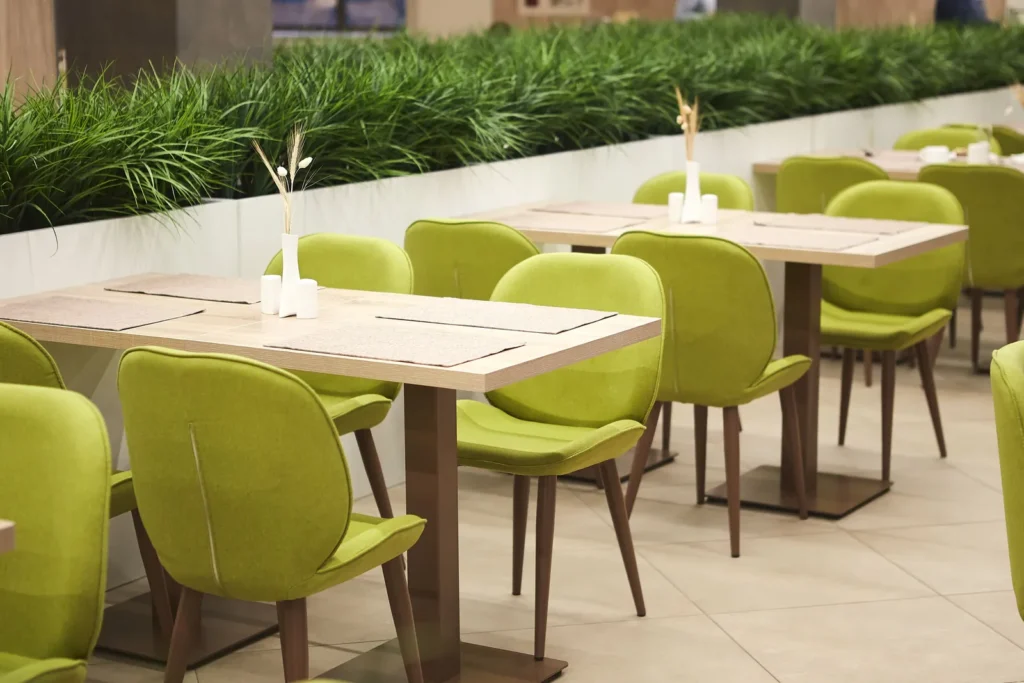
Operator dining descriptions checked on 27 September 2026. Confirm current menus, prices, reservations, dietary requirements and access directly with the venue. Photo: Maxim Titov / Pexels, under the Pexels licence. Generic dining-room illustration, not one of the Makkah restaurants discussed.